
JGS1 vs JGS2 vs JGS3: Choosing Quartz Glass for Filters
Grade differences come from the melting process and hydroxyl content. Selection should rest on measured transmission, thickness loss and substrate specs.
Plain-language optics know-how for purchasing engineers, optical designers and newcomers: principles, coating process, selection rules and real applications — so you know what to pick and why.
Filter: #transmission —— 12 articles Clear
Grade differences come from the melting process and hydroxyl content. Selection should rest on measured transmission, thickness loss and substrate specs.
 Wiki & Glossary
Build a filter transmission measurement with single- or double-beam optics, baseline correction, stable acquisition settings and repeatable sample mounting.
 Wiki & Glossary
Low transmission does not imply high absorption. Use an energy budget to specify reflected power, heat load and meaningful acceptance measurements.
 Selection Guide
Compare useful signal, background leakage and noise to see when a lower transmission peak can deliver a clearer measurement.
 Wiki & Glossary
Separate scratch resistance, reflection and absorption to specify sapphire windows for optical throughput, wear and mechanical reliability.
 Optics Basics
Read transmission and OD views of the same spectrum, check wavelength windows, and distinguish deep blocking from measurement limits.
 Wiki & Glossary
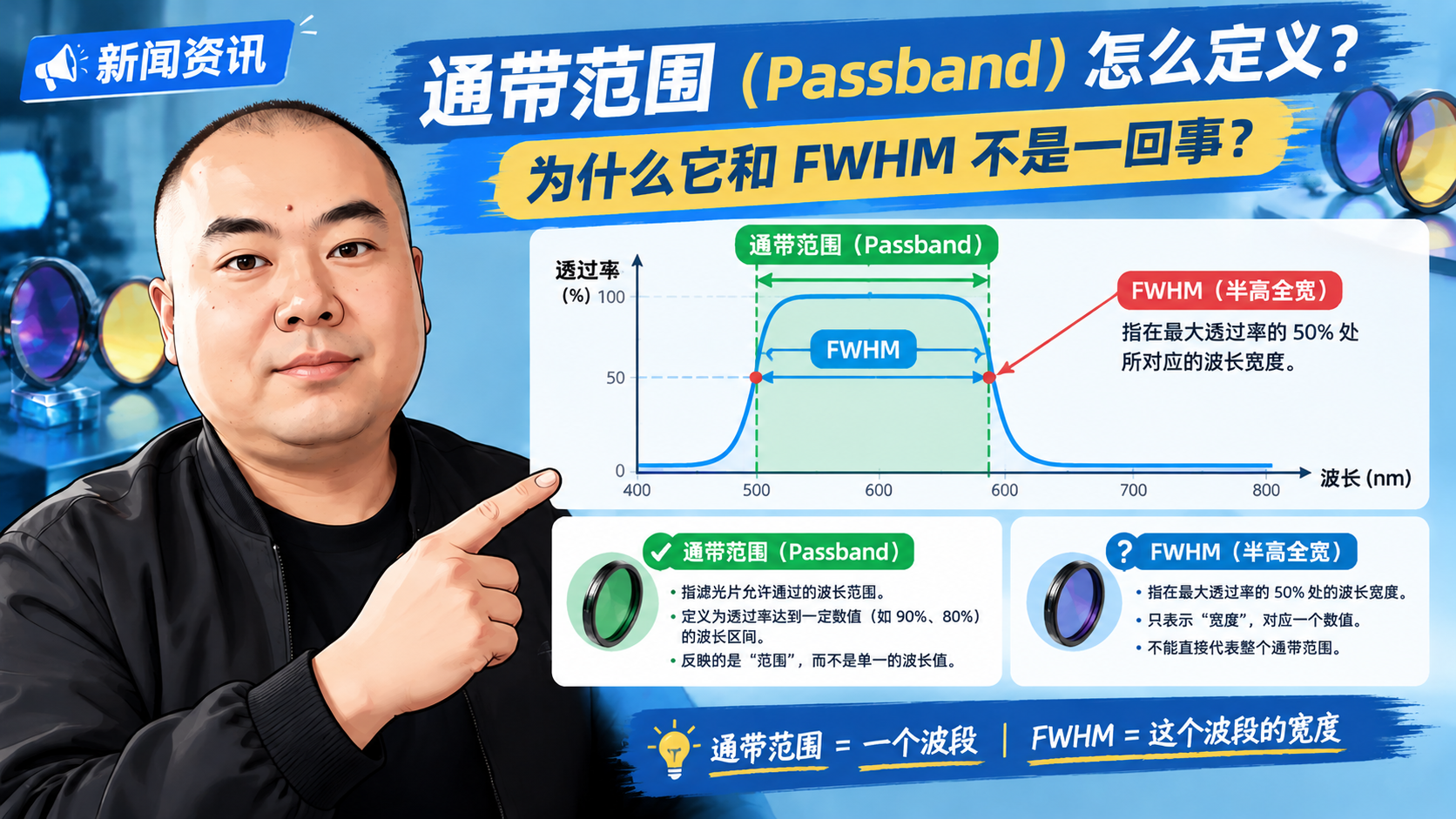
Passband is the wavelength interval over which a filter transmits light effectively. Everything hinges on the word effectively - 50%, 90%, or T greater than 85% give very different intervals. This article separates passband from FWHM and shows how to specify it without unpleasant surprises.
 Wiki & Glossary
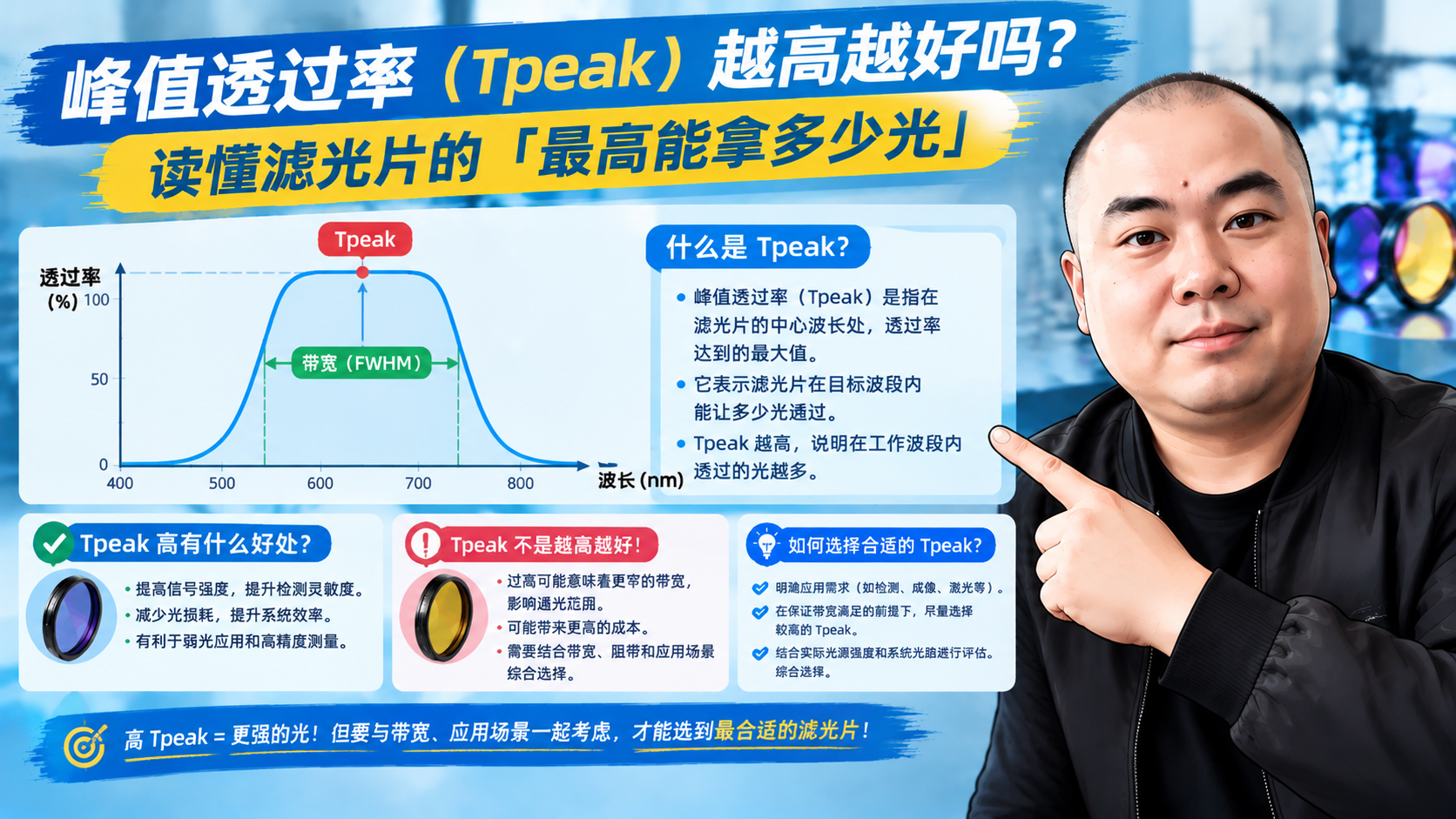
Peak transmission (Tpeak) is the highest transmission a filter reaches in its passband, in percent. It is also the most misread number: a 90% peak does not mean 90% across the passband, nor 90% on your instrument. This article explains its physical limits, how it relates to average and minimum transmission, and when to pay for more.
 Wiki & Glossary
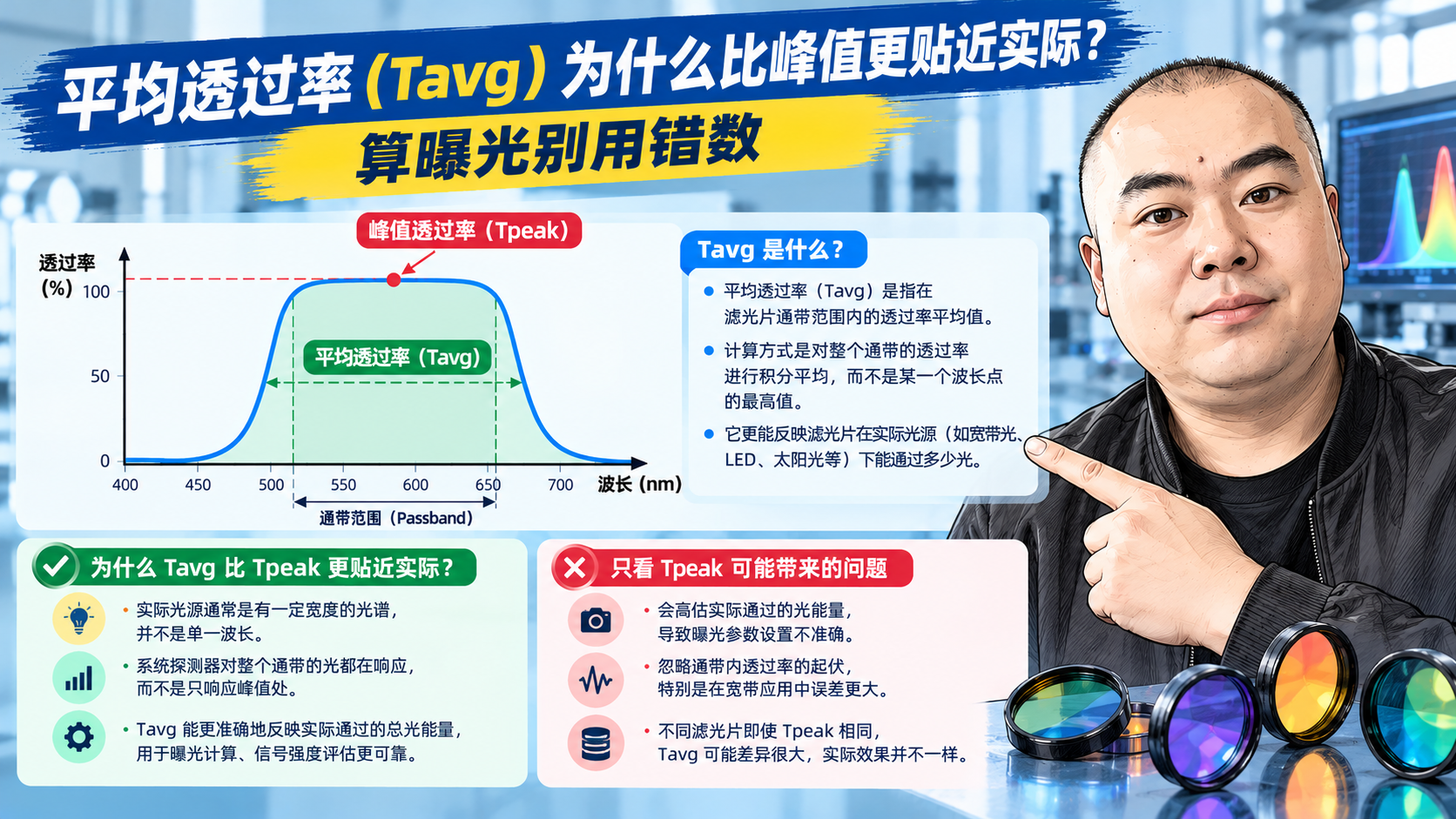
Average transmission (Tavg) is the mean transmission across a defined passband. For power budgets, exposure times and SNR estimates it is far more reliable than peak transmission. This article explains how Tavg is defined, how it relates to Tpeak and Tmin, and why the same Tavg can differ by 10% between vendors.